
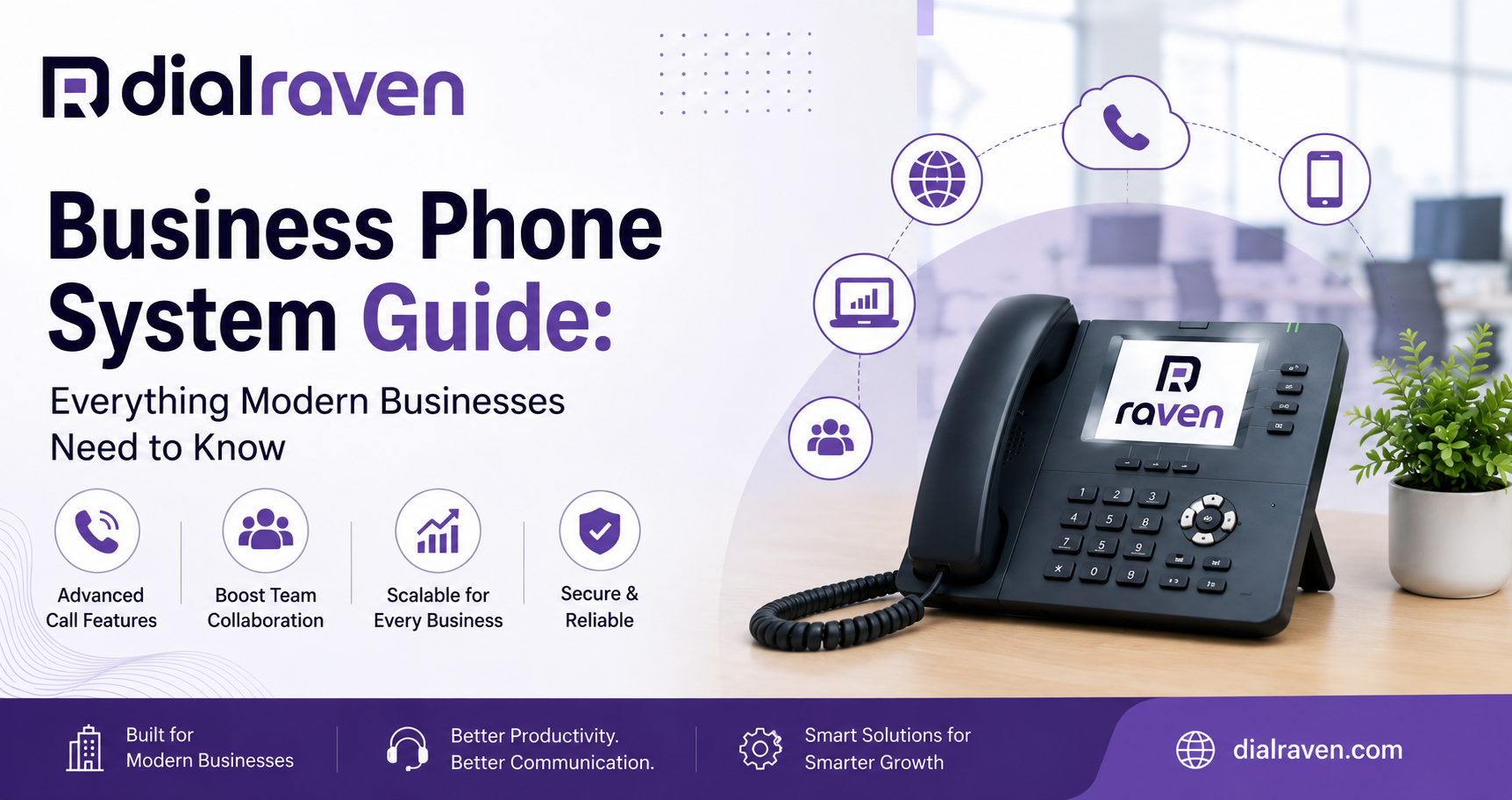
Business Phone System Guide: Everything Modern Businesses Need to Know
Looking for the right business phone system? This complete guide covers types, features, real pricing, and how to choose with confidence.
Quick Answer
A business phone system is a communication platform that manages calls across a team using VoIP, traditional PBX, or SIP trunking. The right choice depends on team size, budget, and whether you need mobility — most growing SMBs choose cloud VoIP for lower cost and faster setup.
Dial Raven Team
VoIP Communication Expert
Choosing a business phone system used to mean picking between a handful of desk-phone vendors and hoping the installer showed up on time. That's no longer how it works. Today's options range from on-site PBX hardware to fully cloud-hosted platforms that can be live in a single afternoon. This business phone system guide breaks down the real differences — what each type costs, which features actually matter, and how to decide without getting lost in vendor jargon. Whether you're replacing an aging system or setting up your first dedicated business line, you'll know exactly what to look for by the end of this guide. If you want enterprise features without the enterprise price tag, Dial Raven's business phone system is built specifically for that gap.
What Is a Business Phone System?
A business phone system is a professional communication platform that manages inbound and outbound calls across teams and locations. Unlike a home phone line, it supports call routing, voicemail-to-email, analytics, and integrations with the software your team already uses. Most modern systems run on Voice over IP (VoIP) technology, which sends calls over the internet instead of copper lines — a shift the FCC has documented as the new standard for business communication.
Types of Business Phone Systems
Understanding the main types of business phone systems is the first real decision point. Each option fits a different stage of business.
Traditional PBX Systems
On-site hardware that manages calls internally. Reliable, but expensive to install and limited in scalability. Best for organizations with existing legacy infrastructure.
VoIP Phone Systems
Cloud-based systems that transmit calls over the internet with minimal hardware. Fast to deploy, easy to scale. Best for small to mid-sized businesses and remote teams.
SIP Trunking
Connects an existing PBX to the internet without replacing it — a middle path for businesses with infrastructure they want to keep using. If you already have on-site equipment, our SIP trunking service modernizes it without a full rebuild.
Cloud-Based Business Phone Systems
Fully hosted and managed by the provider. Employees use desk phones, mobile apps, or softphones from anywhere. Best for multi-location or hybrid teams.
| System Type | Setup Cost, Scalability, Best For | ||
|---|---|---|---|
| Traditional PBX | High | Low | Legacy infrastructure |
| VoIP | Low | High | SMBs, remote teams |
| SIP Trunking | Medium | Medium | Existing PBX upgrades |
| Cloud-Based | Low | High | Multi-location businesses |
VoIP vs Traditional Phone System: Key Differences
The VoIP vs traditional phone system comparison usually comes down to three things: cost, flexibility, and features. Traditional lines run over copper wiring and rarely support more than basic call transfer. VoIP converts your voice into data packets sent over the internet, which is what enables features like auto-attendant, call analytics, and mobile apps — all from one dashboard.
| Factor | Traditional Phone vs VoIP | |
|---|---|---|
| Monthly Cost | Higher | 30–60% lower |
| Setup Time | Days to weeks | Hours |
| Mobility | Desk-bound | Anywhere |
| Scalability | Hardware-limited | Add users instantly |
Essential Business Phone System Features
Not all business phone system features matter equally. Focus on the ones that directly affect customer experience and team efficiency.
- Auto Attendant — answers and routes calls automatically
- Call Routing & Forwarding — reaches the right person, in-office or remote
- Voicemail-to-Email — faster response without dialing in
- Call Analytics & Reporting — visibility into volume and team performance
- Mobile & Desktop Apps — take calls from anywhere
- Call Recording & Transcription — useful for training and compliance
Business Phone System Cost: What to Expect
Business phone system cost depends on user count, feature tier, and whether you need hardware. Most VoIP plans run on simple per-user pricing rather than the bundled, hard-to-compare pricing of legacy carriers. As a reference point, Dial Raven's plans start at $14.99/user/month with no setup fees — most businesses switching from a traditional line save 30–60%.
How to Choose a Business Phone System
Knowing how to choose a business phone system comes down to asking the right questions before you sign anything:
- How many users and locations need coverage today — and in two years?
- Do you need mobile apps, or is desk-phone-only acceptable?
- Is HIPAA, government, or other compliance required?
- What's the real total cost, including hardware and porting?
- How fast can the provider get you live, and what does onboarding involve?
Why Choose Dial Raven
Dial Raven combines cloud VoIP, AI-powered call handling, and omnichannel messaging into one platform — live in under 24 hours, backed by a 99.99% uptime commitment and real human support. Whether you're upgrading an old PBX or setting up your first real business line, get a free quote and we'll build a plan around your team's actual call volume.
Frequently Asked Questions
What is a business phone system?
A business phone system is a communication platform for managing calls across a company, with features like call routing, voicemail-to-email, and analytics that residential lines don't offer.
What's the difference between VoIP and a traditional phone system?
VoIP sends calls over the internet and supports modern features at a lower cost; traditional systems use copper lines and are largely feature-limited and hardware-dependent.
How much does a business phone system cost?
Most VoIP plans run $15–$30 per user/month depending on features. Traditional PBX setups typically cost significantly more upfront due to hardware and installation.
How long does it take to set up a business phone system?
Cloud VoIP systems like Dial Raven can be fully live in under 24 hours. Traditional PBX installs can take days to weeks.
Can I keep my existing business phone number?
Yes — most providers, including Dial Raven, port existing local, toll-free, and vanity numbers at no extra cost.
Related pages
Ready to modernize your phone system?
Talk to a Dial Raven specialist and get a plan built around how your team works.